Sunken Greenhouse: The First Reason We Put A Basement In Our Greenhouse Shed

As An Amazon Associate I Earn From Qualifying Purchases At No Extra Cost To You Learn more.

I’ve always loved greenhouses, but the concept really doesn’t make sense the way it is usually practiced. If you have to heat the greenhouse all winter, and the greenhouse won’t hold heat because plastic and glass is a poor insulator then winter use is very impractical. If a greenhouse gets too hot to grow anything in the summer and you actually have to empty it out completely because it will actually cook the plants, then summer time becomes a headache also. As much as I like greenhouses for their architectural beauty, I had given up on building one myself.

Then I began reading about “Earth Ships” which is an interesting concept of digging a home right into the South-facing side of a hill and encasing the exposed side with a greenhouse. The Earth Ship requires an extreme life-style change however. This type of building requires living-breathing people inside nearly every day to keep the delicate ecology balanced. Although fascinating, there was no way I was going to convince my beloved city boy to live in a narrow green house basement. Looking through all the photos reminded me of the very attractive sunken greenhouses I had enjoyed while living in England. Almost every castle or historic manor estate you tour in England features a few garden innovations to fascinate and educate. My very favorite was a sunken very modern glass greenhouse just a few steps from a matching the newly built café on the grounds. I haven’t found my photos yet of that large glass structure with black metal framings, but the photo below will give you a good idea of the concept behind it.

The brick walled garden is as about as common in England as the basketball hoop is in America. The British have long known how the dark red bricks could capture what little sun they enjoy there and store the heat for later in the day, therefore creating little micro-climates in their backyards. The idea of building lean-to greenhouses against these walls instead of stand-alone greenhouses was the natural next step. Just one further innovation of digging down 2 or 3 or even 4 feet improved heat retention greatly with no real loss in available sunlight. Turns out this isn’t a British invention though.

In 1978 the first reported Chinese-style sunken greenhouse was built. The design uses three solid earthen walls and one south-facing glass wall. It’s use really took off in the 1980’s when plastic film became widely available and could affordably replace the heavy glass. The Chinese government created an initiative to encourage more development of the concept and have been using sunken greenhouses to feed their growing population. China’s goal was to have nearly 3.7 million acres of passive solar greenhouses by 2020. A simple hole is sufficient for some greenhouse experimenters, but better results can come from constructing the walls with rammed earth and brick that does a better job of storing heat for slow release later. I remember reading as a kid this classic book about building a very cheap underground house that was in the pile of Mother Earth News Magazines. A $50 house is a pretty exciting idea when you are 13 years old! Looking up that 1980’s book led me to discover this greenhouse version of the concept published in 2007. I was totally hooked, and became obsessed with the idea.

Another term for this project is the “Walipini” which has it’s roots in Pineapple growing techniques and a greenhouse building project in Bolivia. The Walipini is touted in articles such as “build this greenhouse for $300”. As appealing as that looks at first blush, I’ve already spent the better part of an Easter weekend bailing water out of the basement of my house flip. The open stairwell leading down into a pit with no central drain raised a lot of questions for me. In addition, most traditional greenhouses suffer from curious mice and other varmints looking for a warm winter home and a spot of food. Earthen walls and a roof of plastic film are no match for a 24/7 attack of little creatures. Instead the greenhouse is trimmed in metal and clear corrugated panels like these are used.

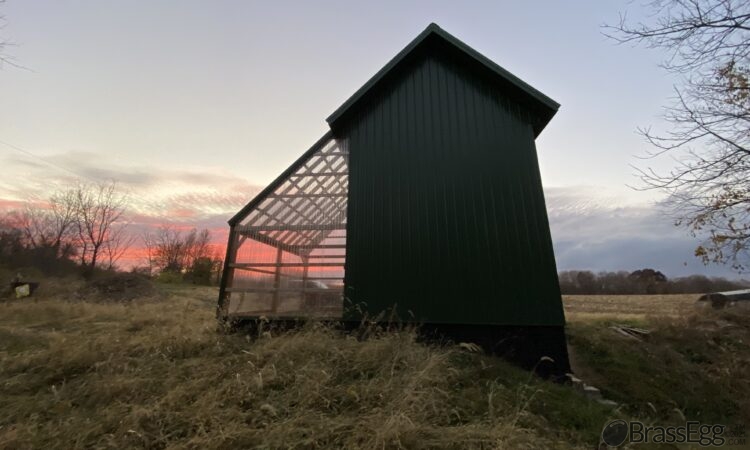
It was decided that instead of adding a little Walipini on the outside of the shed, that the shed would be expanded to have its own “built on” greenhouse. To prevent mice from building through the wall, the basement was extended as an addition. As in; instead of making the basement larger, we constructed a poured concrete wall between the shed construction and the greenhouse addition and only put a 36″ door way between the two. Each section has it’s own drain, but the likelihood of flooding is very low with a poured wall and solid concrete floor. The ideal depth for a Walipini is between 3 and 5 feet, but a standard basement depth is 8′ and trying to construct one part of the basement at a different depth would increase the complexity/cost of the build. Because the winter sun hangs so low at my latitude, any plantings will have to be raised at least 3 feet and would best be served at 5 feet during the late winter/early spring.

On 90 degree days in the summer the second floor of the greenhouse reaches 120 degrees! In the basement area of the greenhouse the temperature is usually 80-90 degrees, and the shed section of the basement ranges from 70-80 degrees. The summer, spring and fall work excellently in this greenhouse because the basement section does moderate extreme heat well, and lettuce continued to grow in 2020 well into fall and early winter. However, this design seems destined to fail as a winter green house. This very cold 2020-2021 winter found that inside temperatures were only about 5-10 degrees higher on cloudy days (and most winter days are cloudy here). Sunny days might see a bump of 15 degrees, but that heat quickly dissipates after the sun goes down. One reason the greenhouse isn’t holding heat is because of the walk-out basement door on the North side of the shed. This wall should have a large mass of backfill insulating it from the cold winds blowing off the bare corn-field, but instead much of the desired geo-thermal heat isn’t available because we weren’t able to completely finish the backfill project before the fill-dirt froze solid. Even with a perfect wall of backfill against that North wall, we would still constantly lose heat through the door though.

Sitting in the greenhouse this winter trying to figure out how to improve the winter usability factor highlighted how the ventilation is barely enough to keep pace during the summer, but is far too much in the winter. Sitting in the greenhouse on a particularly sunny and windy day, I could feel a draft. The first inch of snow on the ground reflected sunlight up under the floor joists and it was clear that the gap I was trying to cover to prevent mice from entering was also a factor in heat loss. I researched the dynamics of passive solar buildings and learned that the sun was heating up the air on the second floor, causing it to rise out the ridge vents at the roof top. This escape of heated air created a vacuum which drew in air from the very lowest levels. When a thick blanket of snow clogged all the air gaps around the foundation there was a noticeable change in the greenhouse climate. The greenhouse heated up and created the largest gap between interior and exterior temperatures it had seen all winter…almost 20 degrees. Covering the two floor drains also helped maintain that heat much longer after sundown than we had seen before. Ground pipes are often used in root cellars or greenhouse structures to pull in geo-thermally cooled or heated air…but in this case the short pipe is only pulling in air 18-inches under the surface of the ground and only 20 feet from the greenhouse. In winter it is really cold, in summer it is just a little cooler than the surrounding air. Covering both of these drains in the winter along with sealing the gaps around the foundation should create a better ‘air seal’ that so that heat rising to the roof ridge is held inside and can accumulate in the building by a vacuum. In other words, it will be less able to flow out the top while pulling cold air in through drains and gaps around the basement.

The summer plan is to install two vents in the upper-most peak of the greenhouse and perhaps also install a opening and screened window on the second floor. In the basement, both drains will be uncovered and the transom window over the basement walk-out will be unsealed, removing several layers of weatherization until only aluminum insect screening is left. This should purposely increase the amount of draft the green house can generate to pull heat out in the summer…but with designated windows and vents that can actually be controlled with insulated ‘shutters’ from the inside. This should make it much more pleasant inside the greenhouse for summer use.

Brass Egg™ participates in affiliate marketing programs. As An Amazon Associate I Earn From Qualifying Purchases At No Extra Cost To You Learn more. Brass Egg™ of Russell Holdings Group, LLC 2021. All content ©2021 Russell Illinois Holdings, LLC. All Rights Reserved.

One for the Ladies: Suburban Housewife Fail

As An Amazon Associate I Earn From Qualifying Purchases At No Extra Cost To You Learn more.

The following is a rebellion against the modern structure of suburbia. It was originally written in 2012 as a long rant, and is first published here with editing. This article relies heavily on stereotypes, because I lived those stereotypes for so many years. Oh, and the above woman is not me, but isn’t she adorably retro?

Doing housework all day can be a drudgery, but many housecleaners I know really enjoy what they do because they get the variety of different homes every day and can see the value they bring. Dusting the same tables day after day and ironing tablecloths is a shame and total waste of time. However, the idea that being a wife and mother is the problem is a false leap in logic.

Being a wife and mother can be incredibly satisfying, but the current suburban housewife model is very artificial and suffers because the law of “form follows function” has not been observed. An artificial illusion is created whereby the husband (often with a wife’s encouragement) wants the largest home they can possibly afford with a 30-year mortgage. Then the husband proceeds to work longer and longer hours due to the pressure of that mortgage and the wife effectively becomes the ‘maid of the manor’ because constant maintenance is required to keep up appearances that the family is rich. All the other neighbors are doing the same thing, so husband and wife assume this is correct and ‘go with it’ while having several children who also treat mom as a maid and dad as a taxi driver and ATM.

We have become a nation of maids and maintenance men in order to keep up this artificial facade.

Perhaps 50-100 years ago we had a more logical set-up:

The mother, as a “Family Manager” trained each new ‘associate’ how to do small tasks in line with their physical and mental abilities, enabling them to become more and more satisfied with their contributions to the family. The wife, also organized the household not as a show piece to impress strangers, but as a mini-farm where organic food is raised for improved health and to save money. Today the financial value of a stay-at-home mother who just performs the ‘façade’ function is well documented as very financially beneficial due to the cost of child care, but the emotional cost is draining. However, the Mini-Farm Model is a win-win-win situation on the financial health, “job satisfaction” (mental health), and physical health benefit front. If a wife chooses to involve her husband it can strengthen the marriage and give the couple common goals and points of interest, but she was/is free to take the lead and direct that area of the family. If the children are taught new skills and responsibilities along the way, then it may become clear to a new generation why our great-great-grandmothers loved their jobs as ‘house wives’. The deeper we look, the more we will realize the term never applied to that generation in the first place.

If you read “Farmer Boy” from the Little House on the Prairie series you will see the role a mother played in the financial well-being of the family along with all the other things she did. One of my favorite quotes from the book is Laura Ingalls’ husband speaking about his mother making so much money from her superior butter, “I was so proud of her”. Really warms the heart. There is something to be said for tangible work and concrete results that a family can actually hold in their hands.

Like many of our Great-Great-Grandmother’s, Almanzo’s mother was quite capable in all the areas. She did interesting and useful things like weaving the family tweed even though she dropped a few of her past activities: “Mother didn’t card her own wool any more, since there was a machine that did it on shares. But she dyed it. Alice and Eliza Jane were gathering roots and barks in the woods, and Royal was building huge bonfires in the yard. They boiled the roots and the bark in big caldrons over the fires, and they dipped the long skeins of wool thread that Mother had spun, and lifted them” ― Laura Ingalls Wilder, Farmer Boy

In 2011 I was a ‘façade housewife’ that felt like a bored Chihuahua…trembling with fear that I might mess up some insignificant detail while maintaining a uncomfortable illusion. Our great grandmothers where like powerful Alaskan Malamutes that knew their worth, had goals and loved the freedom of ‘getting after it’. I hope to someday achieve that level of intense confidence.

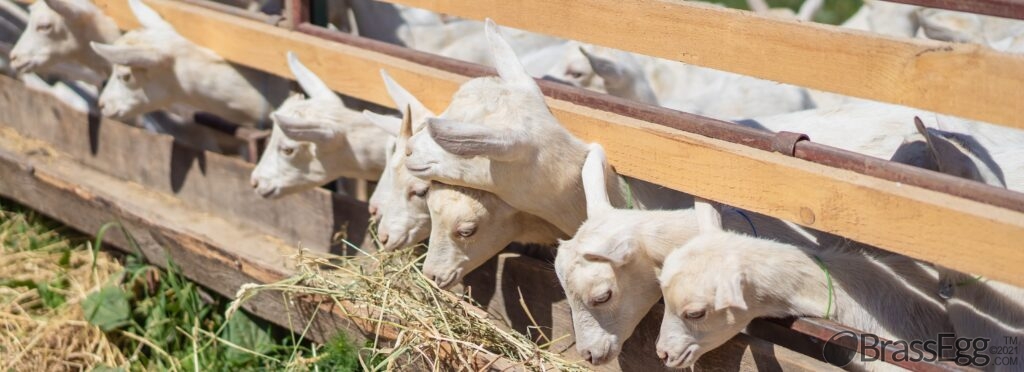
Today (2012) I’m working through the process of turning over the most repetitive housework tasks to my growing children. The tasks that bore me are a challenge for them and the few dollars that they earn help the kids learn to save money, give and spend on things of value. Every onion and asparagus I plant between the roses is my little statement that the façade is crumbling. My husband may not concede to a dairy goat in the three-car garage, but the garden will expand and the children will learn more useful skills and will train their taste buds to distinguish between a garden tomato and grocery store one. In just the first year of gardening, I caught the kids eating the cherry tomatoes off the vine just an hour before I could harvest them for salads. Oh well….wasn’t that the point in the first place?

Any human deprived of work that actually contributes will become dissatisfied, so go ahead and deride the modern housewife façade. Don’t assume that being a drone at someone else’s company will fill all your needs. We are incredibly complex. Maybe it’s time we ladies to toke control of our lovely homes and turned them into Fine Little Farms.

One last quote from that great book Farmer Boy:

“A farmer depends on himself, and the land and the weather. If you’re a farmer, you raise what you eat, you raise what you wear, and you keep warm with wood out of your own timber. You work hard, but you work as you please, and no man can tell you to go or come. You’ll be free and independent, son, on a farm.”
― Laura Ingalls Wilder, quote from Farmer Boy

Originally written 9/17/2012. Edited 2021.

Brass Egg™ participates in affiliate marketing programs As An Amazon Associate I Earn From Qualifying Purchases At No Extra Cost To You Learn more. Brass Egg™ of Russell Holdings Group, LLC 2021. All content ©2021 Russell Illinois Holdings, LLC. All Rights Reserved.

How To Fix a Broken Aloe Vera

As An Amazon Associate I Earn From Qualifying Purchases At No Extra Cost To You Learn more.

There are lots of articles about how to use Aloe and how to propagate more plants, but I’ve yet to find how to rehab one. I’ve killed my share in the past, and I want to learn the secrets. It would be special to give my grandkids the aloe my mom and dad used when I was a kid. I need to quit messing up so much before risking another one of my dad’s original ones.

I’ve already killed three aloes from my mom and one from the local garden club. I picked the latest one up at a big-box store so no one would give me that disappointed look when they asked how it was doing. It was growing fine all summer. It had survived the early Spring inside, slowly been adjusted to direct sunlight while the Greenhouse was being built over the summer and then moved into a 5 gallon pot the morning I broke my leg. Then I forgot about it completely. It grew very large in direct summer sun.

The week before Thanksgiving, fall frosts began to kill back the tomatoes and the aloe began to succumb. The bright green spears where turning dark, limp, even mushy where they had frozen overnight and burst open the cell walls. I had already pulled the Rosemary out of it’s pot and threw it into a bag. Grabbing the Aloe and yanking it by the stem wasn’t an option, so I thought I would tip it out of it’s pot. I misjudged and the whole plant slipped out with a sickening ‘crunch’….three feet from where I broke my leg. Hope my garden isn’t bad luck!

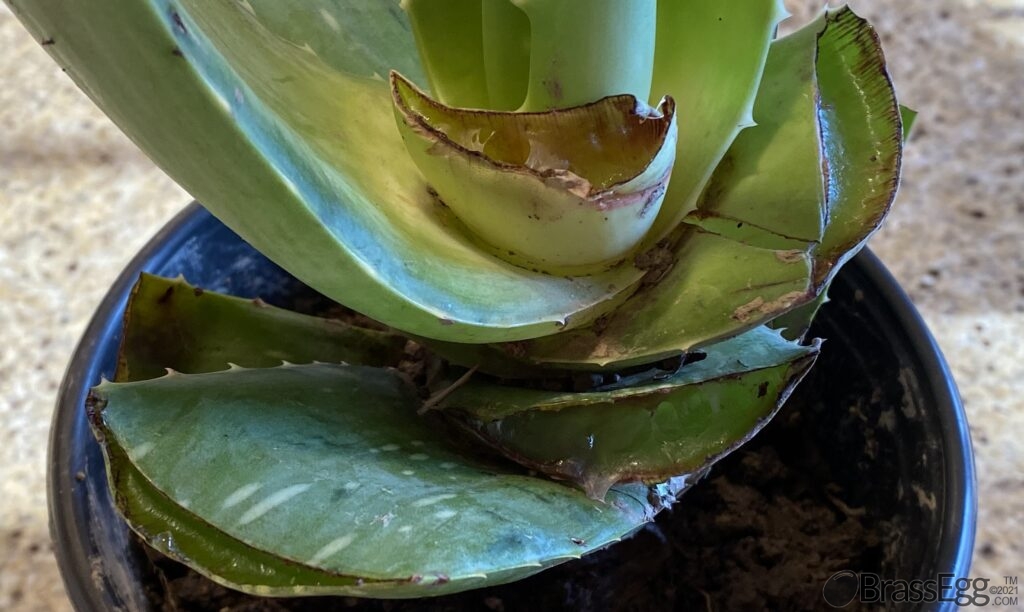
All the major spears where broken in various ways. I had remembered that as a kid the plant wanted to heal straight across cuts. In other words, the spear always ‘died back’ to the point of damage closest to the base. So I trimmed all the damaged spears straight across with a butter knife.

Day 1-November 20

My dad always made a point to only harvest one spear at a time. He wouldn’t break a tip off this one, then break a tip off that one. My dad was a regular user of Aloe for cuts and burns, so the spike he chose would eventually be completely used up. I just thought Dad was tidy.

Day 3-November 23

When the broken edges began to dry up I wasn’t concerned. When they began to seal shut on their own I thought that would be the end of it.

Day 5-November 25

When the edges turned pink I figured it was close to being done. The assumption was that each broken spear would stay plump and we could just harvest them the next sunburn that came along.

Day 11 – December 1

It turns out, that any damaged spike continues to die back to the base until it dries up and falls off. I could have saved myself two repottings by simply trimming off all the damaged spikes the day I crunched it.

Day 19- December 9

Within 20 days it was obvious that all the broken spears would slowly dry up and rot off. Another 4 weeks went by to get photos to prove the theory.

Day 47-January 6

Before repotting for the third time, every damaged spear had to be trimmed off. This time I used a paring knife to get a closer trim near the stem/root.

The Aloe had to be set nearly 4 inches deeper than it had grown in the full sun of the garden after all the damaged spears were removed.

The only undamaged spears from the original “crunch” are now gangly and unbalanced.

The roots of this Aloe are shallow and sparse. Four inches of space had to be found so it could be planted deeper, so as much dirt (clay) as possible had to be removed. While teasing the clay out of the roots I discovered two earthworms.

There is no male/female with earthworms, so it only takes two to start making babies. The Aloe will be moved back to the farm in 3 months, so it isn’t a problem to have them live rent free for awhile. I put the breeding pair together and added some coffee grounds as food. That should hold them for a while based on what I’ve read about vermiculture.

Simply splitting open the aloe and using a butter knife to cut the gel free from the skin in one long and wide ‘fillet’ makes it easy to stack Aloe into a zip-lock bag and freeze it for future use. Aloe ‘fillets’ freeze well and give soothing relief from sunburn or acne breakout.

The Mayo Clinic recognizes topical sunburn, acne and psoriasis uses for Aloe, but warns against ingesting it in it’s ‘unprocessed’ form because it damages the kidneys.

The new growth will come from the center and in time the Aloe will fill out. Next year the Aloe will start in the greenhouse even before frosts are over. It should grow very large by next winter after a summer of sun at the farm.

Brass Egg™ participates in affiliate marketing programs. As An Amazon Associate I Earn From Qualifying Purchases At No Extra Cost To You Learn more. Brass Egg™ of Russell Holdings Group, LLC 2021. All content ©2021 Russell Illinois Holdings, LLC. All Rights Reserved.